
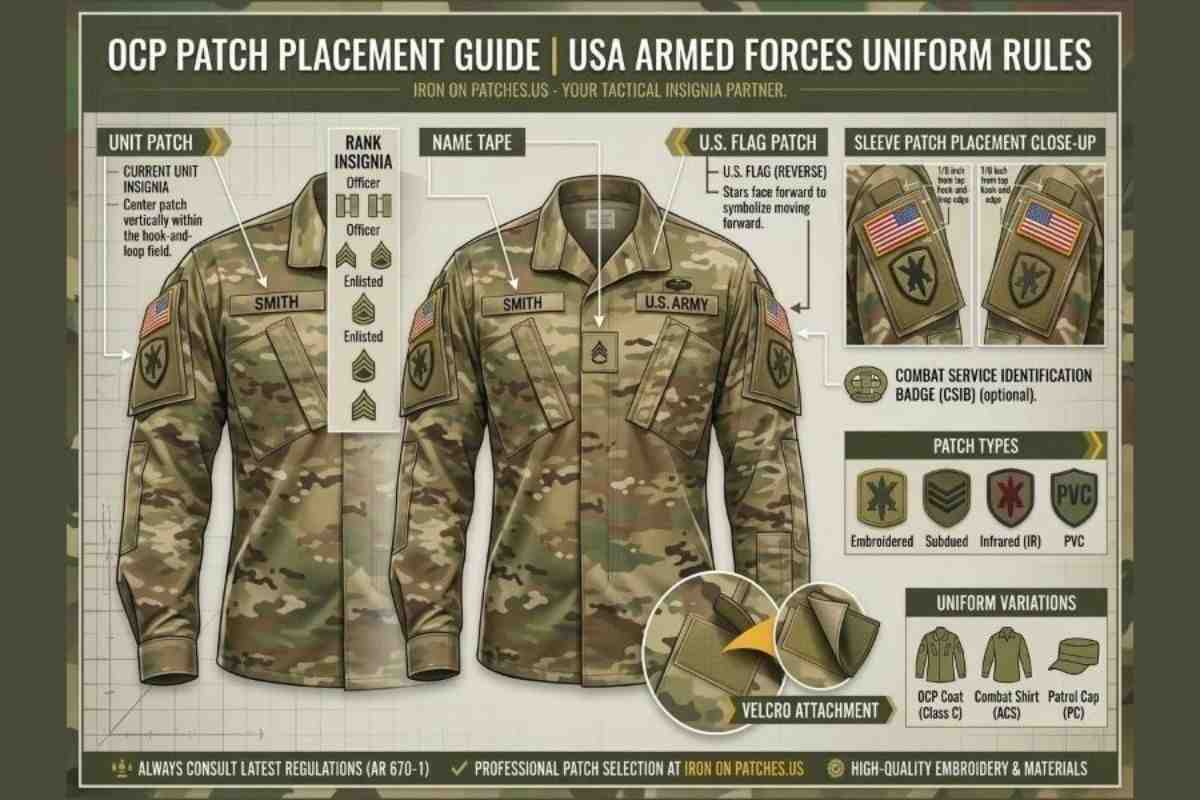
OCP Patch Placement Guide | USA Armed Forces Uniform Rules
A patch may look like a small detail, but its location, color, and authorization all matter on a military uniform. You put the right insignia in the wrong place, and a professionally assembled uniform can be out of regulation. The rules are not just about making both sleeves look balanced for service members who wear the Operational Camouflage Pattern.
They can identify the service, qualifications, organization, and sometimes current assignment of the wearer. The requirements can differentiate between the U.S. Air Force, Reserve components, Army, joint assignments, and specialized units, which can make matters more confusing. This guide will break down the current rules with particular attention to the Air Force OCP patch placement standards that have been updated in recent years.
What Are The Current OCP Patch Rules?
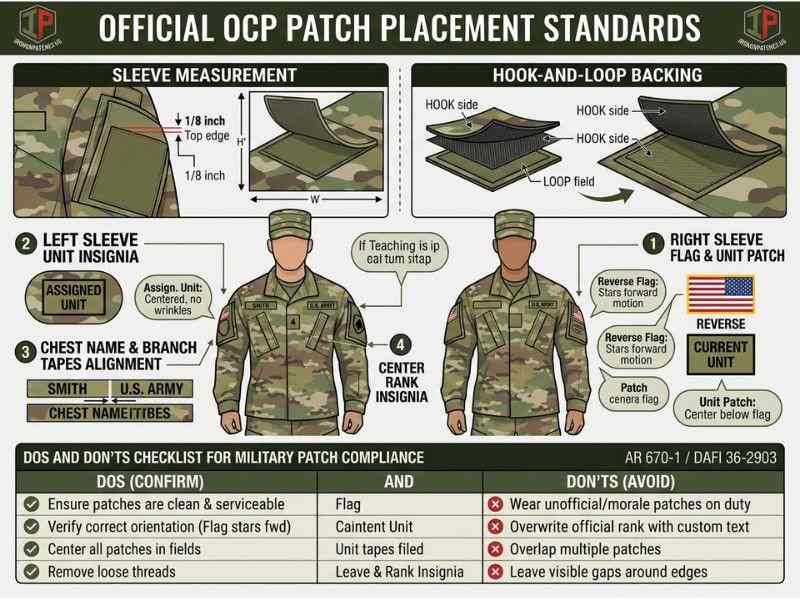
The first thing to know is that there is no single Air Force OCP patch placement that will fit all branches of the U.S. Armed Forces. There can be other uniform regulations published by other branches of service, and there may be more guidelines issued by the commanders as well as some specialist organizations. There was another revision of the dress guidance by the Air Force in January 2026.
Why Patch Location Matters
Uniform insignia can communicate information quickly, and a flag can indicate nationality, an organizational patch can identify the member’s unit or higher headquarters, and an authorized duty identifier can show a particular role or specialty.
This is why it is not acceptable to simply do OCP patch placement Air Force wherever there is available Velcro. Current Air Force guidance specifically states that patches should remain within the boundaries of the Velcro area.
Right Sleeve Configuration
Under the current Air Force guidance, the right sleeve can carry a maximum of two iron on patches. The subdued spice-brown U.S. flag is mandatory and sits at the top of the Velcro area.
The organizational unit-of-assignment patch goes underneath it when available. Certain specialized personnel can have an authorized functional patch or shield in Air Force OCP patch placement, and this depends on their duties and applicable authorization.
Left Sleeve Configuration
When it comes to the left sleeve, it has its own configuration and should not simply mirror the right. Authorized duty identifier patches, higher-headquarters insignia, qualification tabs, and other specifically permitted items can have an impact on the arrangement.
The exact combination will depend on the assignment and qualifications of the members. An Air Force OCP uniform patch placement that is legitimate for one Airman might not automatically be authorized for another.
What About Morale Patches?
Morale patches cannot be a free-for-all. Current Air Force guidance can give wing commanders authority to authorize subdued spice-brown morale patches for specific occasions, such as Fridays or special events.
This distinction is crucial. A privately purchased patch might physically fit the uniform and still be unauthorized for routine wear.
Does Every OCP Uniform Use The Same Arrangement?
No, the OCP uniform is one of the most common sources of confusion. The Army has its own rules under AR 670-1 and DA PAM 670-1, and its insignia configuration can differ from the Air Force. The official uniform of the Army resources continuously identifies those publications as the primary references for wear and appearance.
Steps For Proper OCP Patch Placement
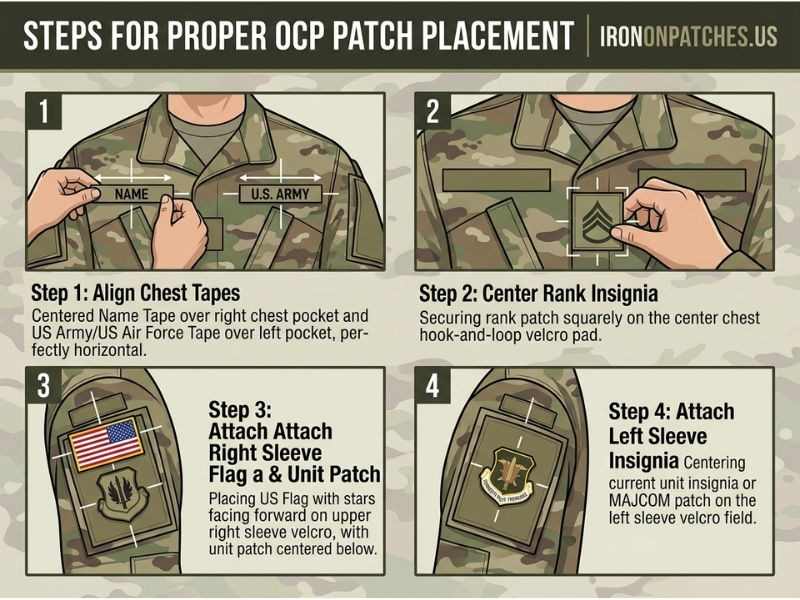
When the Air Force OCP uniform is assembled systematically, getting the configuration right is easier than trial and error. You can use these steps as a practical check before final inspection.
Identify Your Service
You should begin with the branch and component. An Airman, Reserve member, Soldier, and National Guard member may encounter different requirements that depend on assignment and applicable directives.
You should not copy the sleeve arrangement from a photograph of another service member simply because the uniform looks similar. The OCP pattern is already shared, but uniform regulations are not necessarily identical.
Confirm The Current Regulation
Before you attach anything permanently, you should check the current service instruction. For Airmen, the official Air Force Personnel Center dress-and-appearance resource will provide the current DAFI and related updates.
This is important because patch policies have changed before. In 2019, for example, the Air Force moved the squadron patch to the right sleeve along with the flag and shifted the higher-headquarters patch to the left sleeve.
Position Mandatory Insignia First
In this step, you need to develop mandatory items of the patch before you consider optional or qualification insignia. The U.S. flag will occupy the top of the right-sleeve Velcro area for the Air Force. You can now position the unit-of-assignment patch below it when it is required and available. This one is the basic reference point which you will use for OCP patch placement.
Add Authorized Qualification Or Duty Patches
You are now required to add your qualification tabs and duty identifiers when the wearer has those required qualifications or assignment authorizations.
The updated 2026 policy of the Air Force has specifically brought approved duty identifier patches back into the uniform system, which is making it especially important to differentiate an officially authorized identifier from a decorative patch that is purchased from a retailer.
Check Alignment Before Inspection
You should stand naturally and inspect the uniform from the front and rear. Patches should sit squarely, remain inside their Velcro boundaries, and follow the prescribed order.
Small alignment details are important for OCP patch placement in the Air Force, because the regulation can establish specific sleeve configurations instead of leaving placement entirely to individual preference.
Frequently Asked Questions
Is it allowed to sew Velcro patches anywhere on the OCP?
No, it is not allowed to sew Velcro patches anywhere on the OCP, but if you are using the Air Force OCP uniform patches, you should use the authorized ones for the uniform, and you are required to place them within the designated attachment area. The guidance of the Air Force says that you cannot extend the patches below the Velcro boundary. You should always verify the applicable regulation before modifying the garment.
Is it possible to wear a patch from my previous unit?
Yes, it is possible to wear a previous unit patch, but they are not automatically authorized for everyday wear. Some services will permit former-unit or wartime-service insignia under defined circumstances. You should check your current assignment, service regulation, and any applicable authorization before you add it.
Can I use Commercial Morale Patches on OCP Uniforms?
Commercial availability does not mean that it is equal to military authorization. Some commands may allow for specific subdued morale patches during designated events, but routine wear totally depends on official authorization. You should never just add a patch because it matches the color scheme of the uniform.
Conclusion
Choosing the correct patch is more than just about appearance. It will reflect your service regulations, qualification, unit identity, and military discipline. You should choose the safest approach that identifies your branch, install mandatory insignia first, consult the current regulation, and verify any specialized patch before you wear it. Rules can also be changed, so an old uniform photograph is never a substitute for current guidance. Before you do your next inspection, you should take a moment to verify every patch against the latest official instruction.

Hi, I’m Emma Carter. I write about custom iron on patches, creative designs, and branding ideas. I enjoy sharing practical tips and simple guides to help businesses teams and individuals choose the right patches for their projects.