
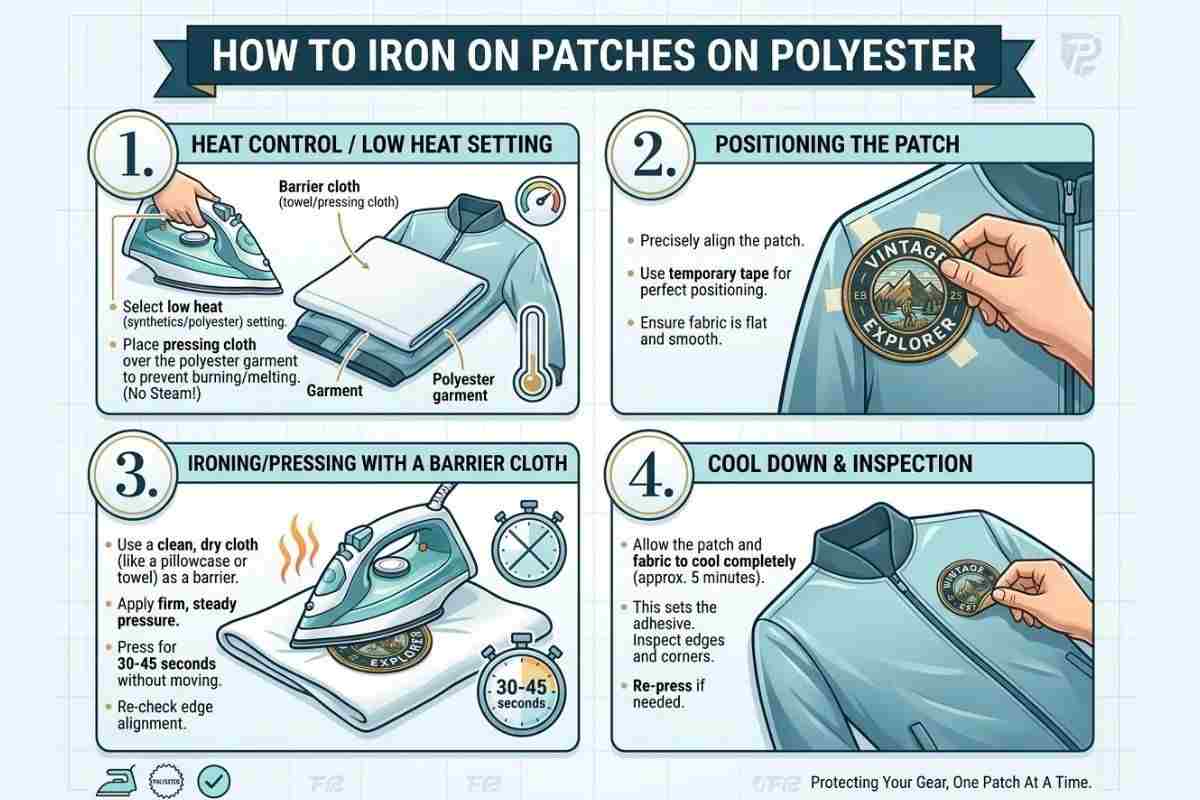
How To Iron On Patches On Polyester
You can completely change the look of a jacket, backpack, sports jersey, or uniform with patches. Polyester can make the job a little trickier, though. Synthetic fabric can help you develop shiny marks, distort or even melt when it is exposed to excessive heat. This is why the usual turning the iron all the way up and pressing hard method is a bad idea.
So, can you iron on patches to polyester without damaging the garment? Yes, but temperature, timing and protection are also important. This blog is a guide that will walk through the safest approach, from checking the fabric to testing the adhesive and caring for the finished patch.
How To Prepare The Fabric And Patch
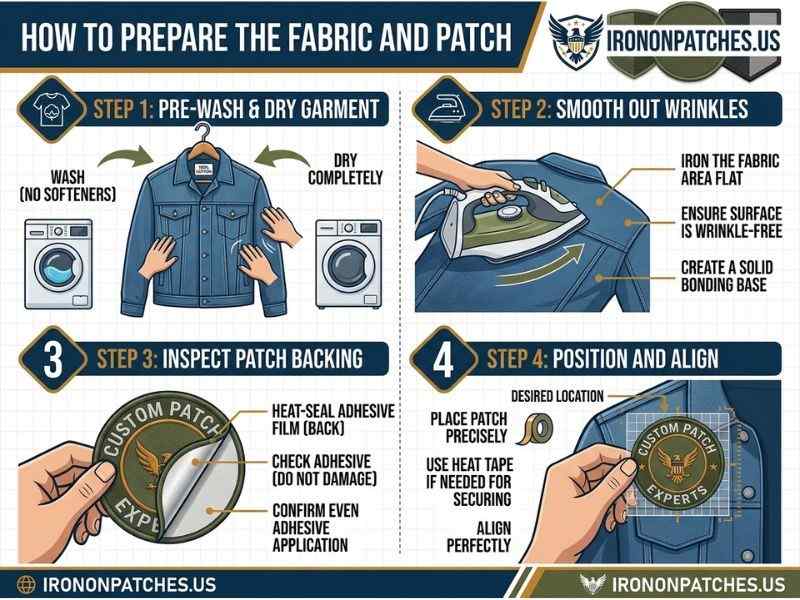
Good preparation can help you to prevent most application problems with iron on patches for polyester before they happen. A few minutes that you spend to position and test the materials can save an expensive garment from a permanent heat mark.
Clean And Dry The Garment
You should wash the garment if it is necessary and allow it to completely dry. Dirt, moisture, oil, or fabric softener residue can interfere with adhesive bonding. It is better to place the garment flat on a firm surface. If the patch needs substantial pressure must avoid a very soft ironing board, as an unstable surface makes it harder to create an even bond.
Position The Patch Carefully
It is best to place the adhesive side against the iron patches onto polyester fabric and check the position from several angles. You should look at seams, zippers, pockets and logos before you apply heat. Once the adhesive starts to warm, repositioning will become difficult. Measuring from nearby seams can help you achieve a professional-looking placement for symmetrical designs.
Test An Inconspicuous Area
Before you commit to the visible section, you should test the custom iron on patch an inside seam or another hidden polyester area. This will reveal whether the fabric develops shine, discolouration, distortion or other heat damage. It is especially worthwhile with older garments or unusual polyester blends. Textile-care guidance also recommends testing an unseen area when the appropriate ironing temperature is uncertain.
Steps For Applying The Patch
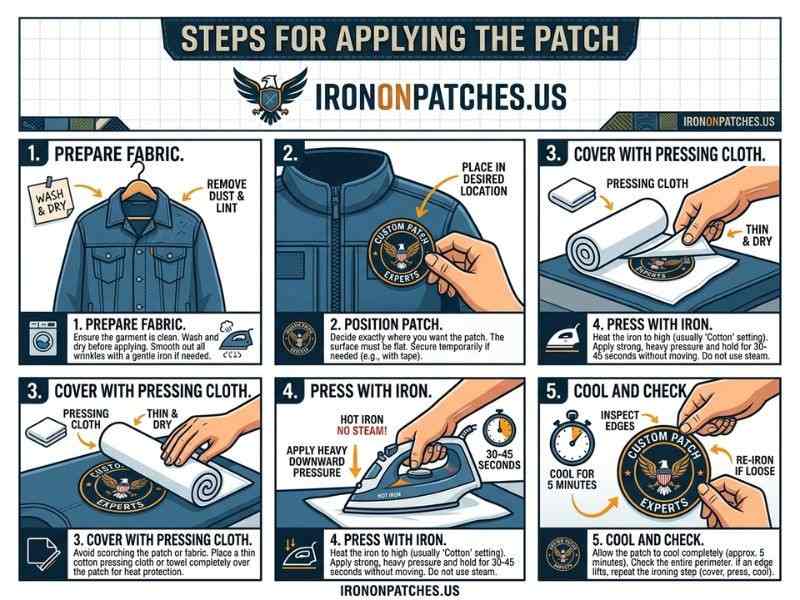
The goal is not just to maximise heat and it is enough to use controlled heat and pressure to activate the adhesive without exceeding the tolerance of the iron on patch polyester fabric.
Set The Iron Correctly
You should set the iron to its lowest effective synthetic or low setting. A practical starting range for many polyester garments is approximately 240–280°F (115–138°C), but you should prioritise the care label and patch manufacturer’s instructions.
Now turn the steam off and let the iron reach its setting before you start, instead of applying repeated bursts of heat while it warms.
Cover The Patch
You should place a thin cotton pressing cloth or suitable protective sheet over the patch. This will create a buffer between the iron and the patch surface.
You do not need to put the hot soleplate directly against decorative embroidery, sequins, metallic threads or exposed adhesive. The protective layer can also help you prevent accidental shiny spots on the surrounding polyester.
Apply Controlled Pressure
Now press the iron straight down instead of aggressively rubbing it across the patch. You should start with a short application that is based on the patch manufacturer’s instructions.
A current polyester-specific polyester iron on patch guide often recommends around 15–20 seconds with a low-temperature household iron, that is followed by cooling before you check the bond. If your patch is larger than the iron, then you should work section by section and keep the patch from shifting.
Let Everything Cool
People often overlook this step. It is ideal not to immediately tug at the patch when the adhesive is warm.
You should allow the garment and patch to cool naturally. Once it is cool, gently test an edge with your fingernail. If any corner lifts, cover it again and apply another short burst of controlled heat instead of immediately increasing the temperature.
Reinforce If Necessary
Stitching around the patch can provide extra security for jackets, school uniforms, workwear, bags, or garments that receive frequent washing.
Heat adhesive is convenient, but mechanical reinforcement is useful if the item will experience repeated flexing or heavy laundering. Some patch specialists similarly recommend using a few stitches for frequently washed or heavily used garments.
You have learned how to apply patches to polyester with this smart process. Follow these steps correctly to ensure you get the best possible results.
Frequently Asked Questions
Can you iron patches on polyester?
Yes, if the garment’s care label permits ironing and the patch adhesive is compatible with the fabric, then you can iron patches on polyester. You should use low and controlled heat, a protective pressing cloth, and no steam until the manufacturer’s instructions specifically require it. It is best to always test an inconspicuous area before you apply heat to the visible surface.
Can you put iron on patches on polyester?
Yes, you can put an iron on patches on polyester, but compatibility matters the most. Lightweight or coated polyester may not tolerate the temperature that is required by some adhesives. You should check both sets of instructions before you start. If the patch needs more heat than the garment allows it, then choosing a sew-on application is safer and usually more durable.
How to iron on patches on polyester without melting it?
You need to keep the temperature low, cover the patch with a pressing cloth and use short applications instead of prolonged heat. Better to not slide a very hot iron repeatedly over the fabric. Let the patch cool before you check the edges, and repeat briefly only where adhesion is weak.
Can you iron on polyester after applying a patch?
Yes, you can use iron on polyester, but avoid to place the iron directly over the patch until its instructions allow it. It is best to turn the garment inside out when possible or use a protective cloth. Keep the temperature within the limits of the garment’s care label to prevent the polyester from becoming shiny, distorted or damaged.
Final Tips
If you are wondering to apply patches to polyester without turning the garment into a science experiment, you should remember the essentials: check the care label, keep the iron dry, test an unseen area, use a protective cloth, and start with the lowest effective temperature.
You should treat a polyester iron on patch as a controlled heat application, not ordinary ironing. Do not force the process if the adhesive and fabric have incompatible temperature requirements instead, you should choose stitching.
Polyester can absolutely support a neat and durable application with the right patch and careful technique. Take your time, as the extra minute spent to test is worth far more than replacing a damaged garment.

Hi, I’m Emma Carter. I write about custom iron on patches, creative designs, and branding ideas. I enjoy sharing practical tips and simple guides to help businesses teams and individuals choose the right patches for their projects.