
What Are Custom Patches? Complete Guide Before Ordering
How can custom patches elevate ordinary clothing and promotional wear? Learn about crucial patch-making methods, know your patch sizes and backings, and learn how to order patches for guaranteed high-quality results!
Get Better Results From Smarter Patch Designs
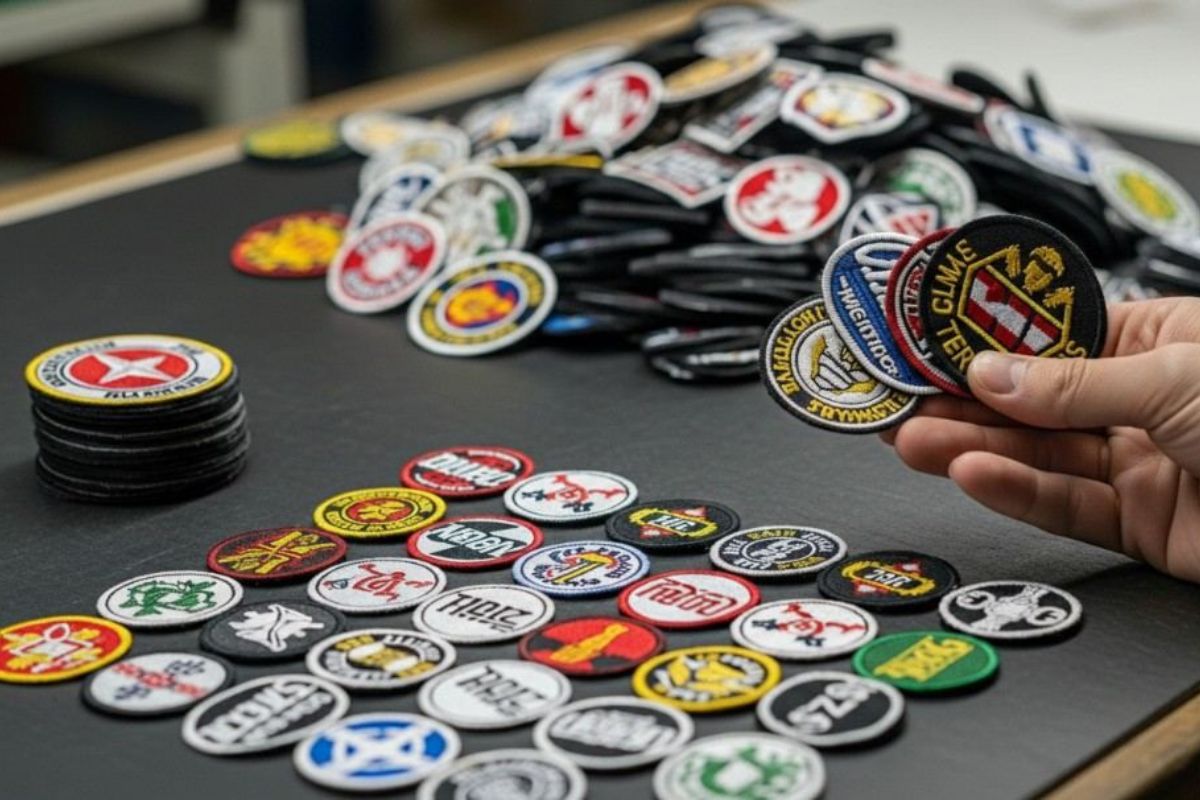
It’s possible to convey a lot with a small patch without using a single sentence. It can signify a corporation, honor a team, identify a club, help a cause, signify an accomplishment, or just provide a jacket, cap, bag, or uniform with a more individual appearance.However, choosing the correct patch isn’t just about sending a logo and picking a quantity.The product has an impact on the appearance. The size influences the readability. Backing has an impact on application. The durability is impacted by the border. The smallest detail can make a difference in the finished product.
Knowing these options ahead of ordering will ensure you are not left with a disappointing result and will help you make a patch that looks, feels, and performs the way you want it in daily life.
What Sets Custom Patches Apart?
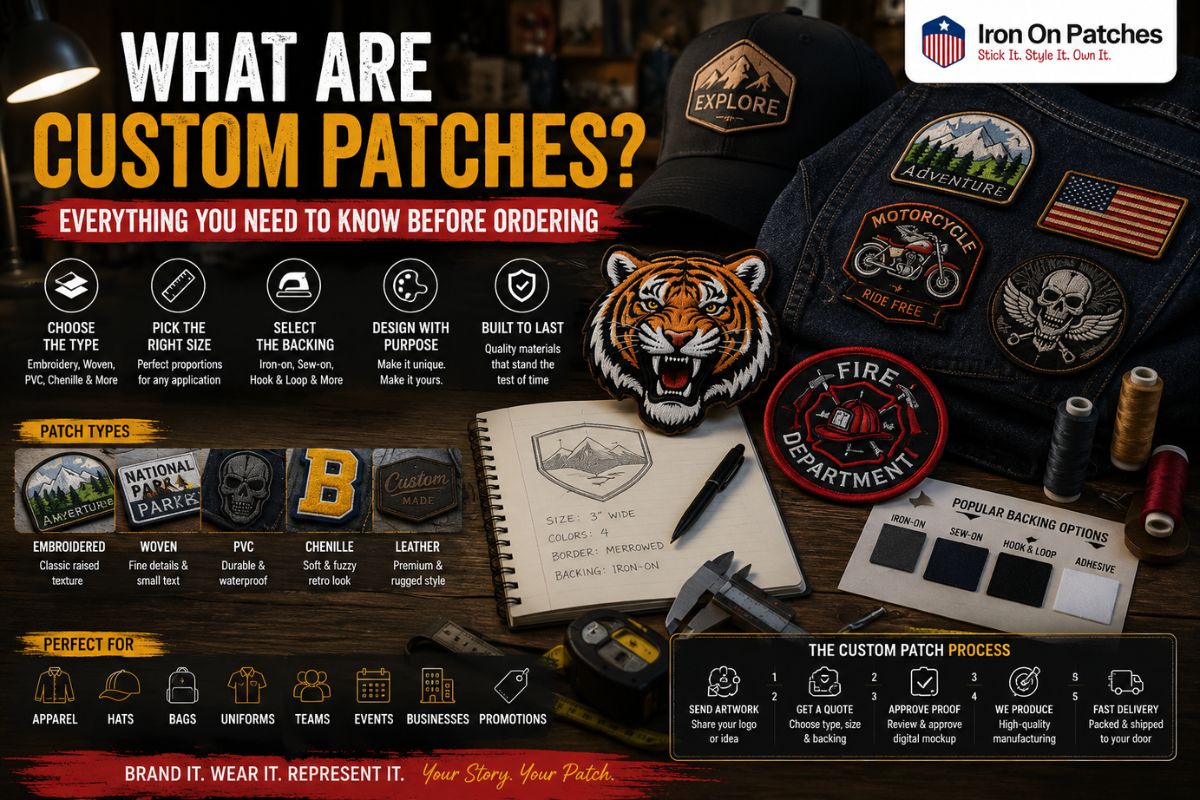
Custom patches are decorative or identification patches that are created to affix to another surface. They are unique because they have the power to control the design and production details.
The shape, size, colors, border, backing, material, and finish are typically available. This provides you with a lot more control than purchasing a ready-made patch from a store.
Embroidered patches are designs made using thread that are raised and textured. Woven patches are small areas created by many threads woven together and can be used for fine details.
PVC patches are molded and provide a smooth, modern, long-lasting finish. Other materials, such as chenille, leather, or printed patches, can make for quite different effects.
Turn Your Brand Identity Into Wearable Recognition
A patch adds a real-life component to a design.
It can be used to display a company’s name or logo on apparel, purses, uniforms, hats, and other fabric items as opposed to a logo on a website, business card, or social media profile.
This is where patches can be helpful to companies that desire the same branding without ordering brand new garments. They can also be employed by sports teams, schools, clubs, charities, outdoor groups, events, and community organizations.
The design should be related to the organization’s character. A company can opt for its logo and its colors; a sports team can concentrate on its mascot, team name, season, or location.
Choose Embroidery For A Classic Textured Look
The embroidered patch is still a popular option due to the raised thread that they offer, which creates a familiar and traditional look.
These are particularly effective with logos, team badges, outdoor wear, uniforms, clubs, and jackets where texture can help to add character.
The stitching will add depth to the patch, and it will look thicker than something that is just printed. But embroidery isn’t ideal for every piece of artwork.
When the design is reduced to a small patch, small typography, thin lines, and highly detailed images may be difficult to reproduce clearly.
Capture Fine Details With Woven Designs
Woven patches are crafted differently from embroidered ones.
Raised areas are not constructed with thicker stitches, but rather fine threads are knitted together to create a flatter surface. This helps provide more depth of artwork and smaller typography in many designs.
These can be beneficial for logos that include fine lines, intricate symbols, or tight text. A smooth surface also adds to the neat and modern appearance of woven patches.
Get Reliable Performance From Durable PVC Patches
PVC patches are very different in their feel compared to thread-based patches.
They come in flexible PVC and offer a fresh modern look, either as a raised or recessed detail. Their material also comes with rugged usage and moisture resistance characteristics that make them ideal for such conditions.
Common applications include outdoor equipment, bags, workwear, sports products and tactical-style products. PVC can also be used to produce strong visual effects as the design is created by various levels, textures and color areas.
Select The Right Size For Your Garment
The size affects the look and functionality. If the patch is too small, it will miss out on some important information, and if it’s too big, it will overpower the garment or may be uncomfortable in some positions. Consider the surface before determining the dimensions.
Different proportions may be required for a shoulder patch, chest badge, cap patch, backpack patch, and jacket-back design.
Think about what the patch will look like at normal viewing distances too. A large jacket panel design will generally be more detailed than a small cap design.
When placing the patch, it is helpful to measure the exact area where it will be placed and compare that measurement with a printed or actual mock-up.
Frame Your Artwork For Greater Visual Impact
The border might appear to be a minor element, but it serves a purpose.
It helps determine the shape of the patch and provides a visual separation between the design and the garment. A clean border can also add to the finished product’s overall look.
Some of the most popular are merrowed or stitched borders, laser-cut edges, and others depending on the patch material.
A traditional embroidered patch could look natural with a traditional stitched border, or a PVC patch might suit a clean molded border.
Create Designs That Reflect Your Unique Identity
Personalized Patches provide individuals, teams, clubs, and businesses with an easy method to create truly significant designs. Names, logos, dates, symbols, slogans, and memorable artwork may be used together to convey a particular message or event.
They are particularly effective in making uniforms, jackets, bags, caps, event items, and promotional items. With a little creative effort, even a mundane object can be transformed into something that signifies a team, a success, or a memory.
Selecting the right colors, material, size, and backing can help your patches fit professionally without straying too far from the story or purpose of the design.
Find The Right Backing For Every Application
The backing dictates the way the patch is to be attached to the final surface.
Iron-on, sew-on, hook and loop, and adhesive backing are common types, and may differ by patch type and brand.
For clothing or other fabric products that can withstand heat, the iron-on backing may be helpful. Sew-on backing can be helpful for a more lasting attachment.
Hook and loop backing is useful if patches are frequently removed and replaced, particularly on equipment that is compatible.
Match The Patch Material To Your Purpose
The material should be consistent with how the patch will be applied.
Embroidery can be used to give a traditional uniform patch the right look. If you need the logo to be detailed, woven construction might be a better option. In the case of outdoor products, PVC can provide a combination of durability and contemporary design.
However, there are also occasions when printed- or sublimated patches are appropriate, especially if the artwork has photographic detail or multiple color changes.
The best way to do this is to begin with the application and work backwards. Next, select the production technique that will enable the following answers.
Use Custom Patches To Strengthen Business Branding
Patches can be an effective extension of the brand’s visual identity and can be used by businesses.
They can be included in uniforms for employees, promotional items, event swag, customer gifts, and branded accessories, as well as in sports sponsorship items.
A company can update a suitable piece of uniform with a new patch rather than changing the whole uniform due to changes in the patch. This can lead to a more flexible branding system, especially when businesses require managing uniforms across multiple locations.
Protect Your Investment Through Proper Care
No matter how good a patch is, it requires sensible care.
Not all patch types react the same to washing, heat, friction, and harsh cleaning products. Care instructions are therefore dependent on the material and backing used.
Too much heat during washing or drying can impact the adhesive performance for iron-on patches. Stitched patches can be more durable, but can fray or even tear the fabric if not handled carefully.
Never assume that all patches can be treated in the same way; always follow the care instructions provided by the supplier.
Avoid Common Mistakes That Reduce Quality
Small decisions made at the pre-production stage can lead to many patch issues.
A frequent error is picking a material that doesn’t relate to the artwork. The other is making the patch too small to print the text. Some buyers also choose a backing without considering how the clothing will be laundered, or if they will remove iron on patch.
The cheaper quote might not contain the same material, backing, finishing, artwork support, or the same production quality. The cheapest may not be the best order. It’s the one that provides you with the correct design accuracy, durability, look, and value.
Work With Experts Who Value Your Vision
With the right Custom Patch Maker, the ordering process can be made easier and more rewarding. With a little guidance from an experienced patch maker, you can learn about materials, sizing, borders, backing, and artwork modification depending on the intended use of the finished patch.
They can even offer design proofs and samples before larger production runs to ensure that colors, details, and overall quality are confirmed.
Engaging a professional supplier ensures that your patches are a true representation of your brand, team, organization, or concept, and that they look finished and will last.
Design Patches That Grow With Your Brand
The best patch isn’t just as pretty when it is first put on.
It should serve its purpose for months or years after.
For a business, this could be ensuring uniformity of brands in uniforms. For a team, it could be a season or performance that’s saved. For a club, it can be a club membership. For one person, it can represent a personal experience.
Select art that will be recognizable, materials that are appropriate for the purpose, backing that will fit the garment, and a supplier that will provide consistent quality.
Faqs
What are the various kinds of custom patches?
The main categories are embroidered for the classic 3D texture, woven for fine details, printed for photo material, PVC for waterproof outdoor wear, leather for high-quality rustic wear, and soft chenille for retro varsity jackets. Every style has a different visual texture, depending on the equipment you use.
What do you need to get patches?
Patches require high-resolution artwork, dimensions, and a desired border style to order. You must have the right backing material for application: thread for sew-on, a household iron or heat press for iron-on adhesive, loop fabric for Velcro adhesive, or smooth surfaces for temporary peel-and-stick adhesive.
Is a custom patch factory good?
Direct-to-factory suppliers are often a great option as they provide wholesale pricing, stringent quality control, extensive customization options, and quick turnaround. Ordering directly means no middleman markup; you’ll receive high-grade materials, precise stitching, and consistent bulk production that is delivered to your exact brand specifications.
What is the process to order custom patches?
To order, you must first send artwork, dimensions, patch type, and backing to a manufacturer for a price estimate. Then, after careful review and approval, check and approve the digital mockup proof sent by their design team. Your custom batch is then manufactured at the factory and shipped directly to you.
What is the cost of custom patches?
The price of custom patches typically ranges from $0.50 to $8.00 per piece and varies based on the size, material, stitch count, and backing of the patch. Standard bulk orders are typically $1.00 to $3.00 per patch for most organizations, with ordering in bulk quantities resulting in a significant drop in the unit price.
Conclusion
Custom patches are small items that have a surprisingly large selection of options. The appearance and function of the patch can be affected by the materials, artwork, size, shape, border, backing, application, and care.
The easiest and best way to get started is with the purpose. Determine the purpose of the patch, the message it should convey, the duration it should last for, and the type of look it should have for the project.
Then select the production method and backing that will meet those needs. When preparing artwork, be careful, look at a proof, think about a sample for larger orders, and choose a supplier by quality and communication, not by price only.
If these details are managed properly, a patch can become a beneficial branding mark, a cherished memento, or a long-lasting piece of everyday clothing and equipment.

Hi, I’m Emma Carter. I write about custom iron on patches, creative designs, and branding ideas. I enjoy sharing practical tips and simple guides to help businesses teams and individuals choose the right patches for their projects.