
How To Choose The Right Custom Patch Material
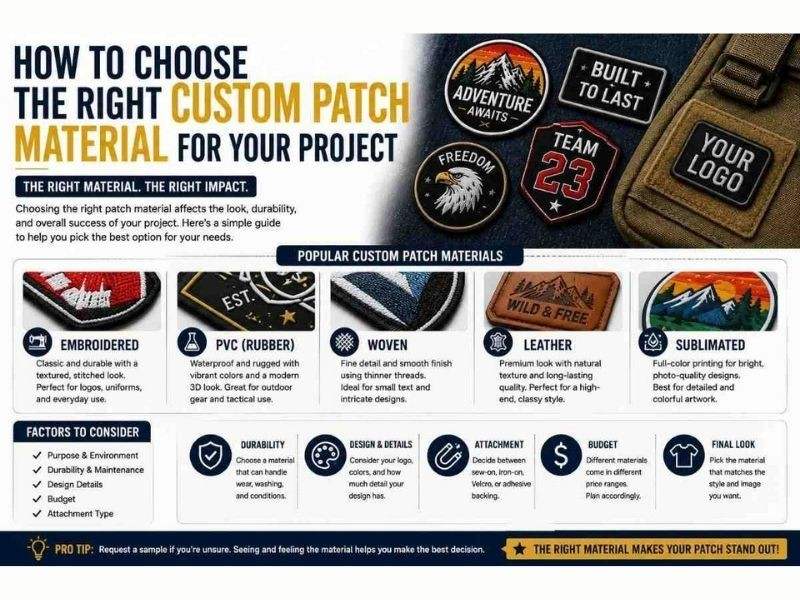
Confused about what custom patch backing and fabric would be right for you? Combine tough canvas with thick threads for work clothes, use tough rubber PVC for waterproof coats, or chenille for athletic letterman jackets.
How Material Basics Influence Overall Quality And Appearance
A patch may totally transform the appearance of a jacket, uniform, backpack, cap, or any piece of work clothing. However, selecting the right patch is not just about choosing a color or a shape.
The type of custom patches materials used and the manufacturing process may influence the legibility of the logo, its tactility, durability, and appropriateness for the particular object the patch is intended for.
The vivid sports logo may require the application of raised embroidery, whereas an elaborate brand emblem with small text may go better with the woven material.
Being aware of those distinctions before purchasing may prevent the buyer from getting something that does not meet their needs.
Start By Matching Material To Project Needs
The type of material required for a patch is determined by answering three straightforward questions, namely the location of the patch, the frequency of handling it, and the nature of the design.
Whereas a patch that will be attached to outdoor clothing requires tougher materials, those that will be worn less frequently do not require the tougher materials.
Current patch materials include embroidery thread, woven patches, PVC, chenille patches, leather patches, and printed polyester patches.
Each of the materials gives a unique appearance and suits certain uses. The requirements of the project determine everything else in the selection process.
Choose Embroidery For Bold Textured Branding
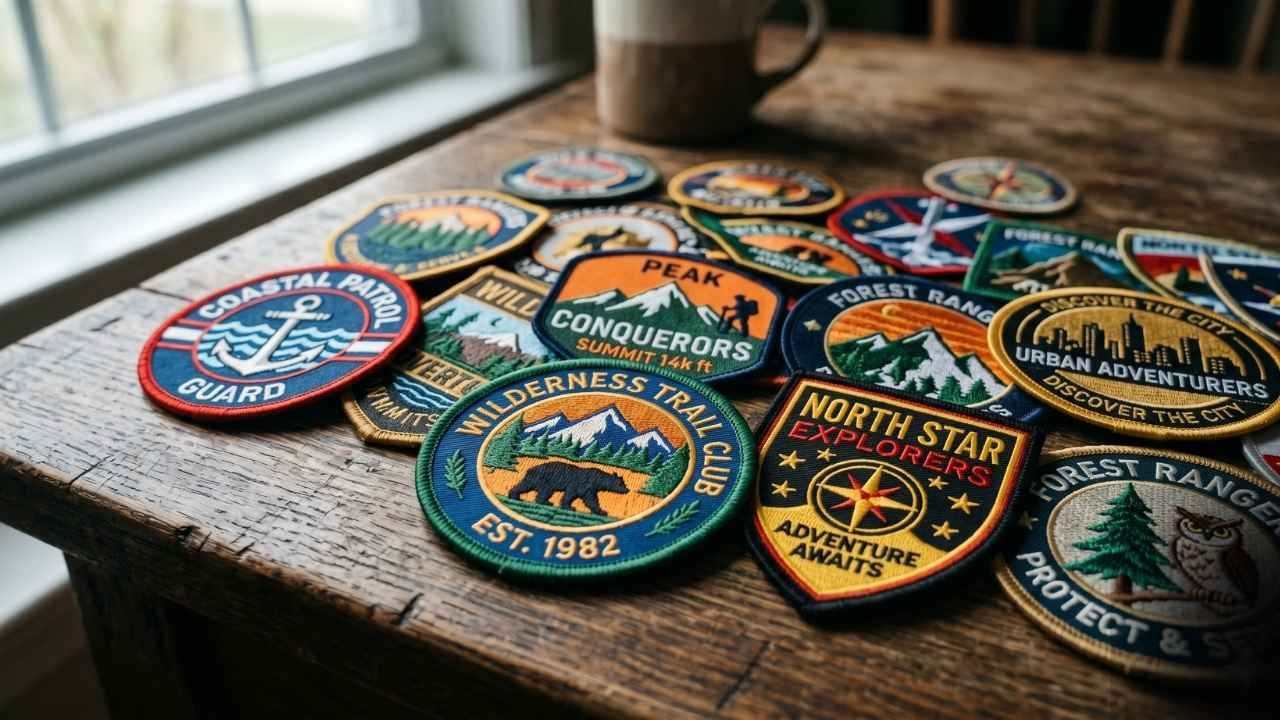
Embroidered patches still continue to be a preferred choice because it lends a classic look and a raised appearance. Embroidery is done by using colored threads on a base fabric material to create a raised effect.
Therefore, embroidery is an ideal choice for logos, team badges, uniforms, club patches, and wherever there is a need to create a design with a stitched appearance. The raised appearance of the thread may also lend a solid feel to the patch.
But embroidery becomes problematic when the piece has extremely small text or lines, as thicker thread requires more space.
Thread Density Selection Reveals Crisp Artwork Details
Transforming complex digital vectors to real fabric material is a fine art of achieving the perfect balance between the size of the thread and the texture of the surface.
Simple and bold logos consisting of large blocks of colors work best in traditional twill material, as thick sewing results in deep textures.
Nevertheless, when assessing Embroidered vs Woven Patches based on details such as complex artwork, the use of thin threads is common among woven patches to help depict tiny letters, fine lines, and intricate shading.
The appropriate embroidery technique will go a long way in ensuring that your message is conveyed in a clear manner without any complications.
Use PVC For Tough Outdoor Applications
PVC patches have an entirely new look compared to thread patch designs. While the thread patch is completely made out of stitching and weaving threads, the PVC patch is molded.
Because of its waterproof and durable nature, it is suitable for outdoor use, tactical equipment, bags, uniforms, and anything that might be subjected to tough conditions.
PVC can also be used to achieve a neat design that does not involve any kind of embroidery. It is particularly suited for modern and structured designs.
Pick Leather For A Premium Natural Finish
The leather patch is used to make a product look more sophisticated and authentic. It is most commonly used in denim, caps, bags, workwear, and fashion items.
The design can either be embossed, debossed, engraved, or any other type of marking on the fabric material. This provides a smooth finish without having the appearance of stitches involved with embroidery.
There is an option of genuine and vegan leather fabrics, providing brands with an option to choose fabric material according to their requirements.
Leather works exceptionally well if the patch needs to be integrated into the product itself instead of being seen as an additional decoration.
Consider Chenille For Soft Statement Designs
The chenille patch has a textured, yarn-filled appearance that is very familiar with varsity and letterman-type garments. The appearance of the chenille patch is distinct from other types of embroidery since its yarn creates a plush effect.
This makes chenille Iron On Patches USA ideal for use on larger typography, sports clothing, school jackets, clubs, and any fashion item where texture plays an integral role in the design. It is less ideal for small designs as its heavy yarn makes it more suited for larger shapes.
When boldness and texture are required to make a design look immediately eye-catching, chenille becomes an excellent choice.
Choose Printed Patches For Colour-Rich Artwork
Some art pieces include images that are made using photographs, complicated illustrations, gradient effects, or many colors. Such works might not be perfectly recreated using the threading method.
Instead, using either sublimated patches or patches printed directly onto fabric surfaces would be more appropriate. Sublimated patches are ideal for unlimited colors, gradients, and photographic artwork.
Thus, printed patches become a good option for promotions, illustrations, event visuals, and designs that require color changes.
Compare Materials Before Making The Final Choice
The Patch Material Comparison will be very helpful in making the choice a lot easier in case many materials seem to fit the bill.
| Material | Best For | Main Advantage |
| Embroidered | Logo and uniforms | Classic, raised design |
| Woven | Small details and typography | Smooth and sharp design |
| PVC | Outdoors and tactical gear | Moisture-resistant design |
| Leather | Premium fashion products | Natural and refined design |
| Chenille | Varsity sportswear | Raised design |
| Printed | Detail-oriented and colorful design | Colour options |
Comparison must be made based on the needs of the project rather than selecting the costliest choice.
A quality leather patch might look good on a jacket but be out of place when put on a light sports outfit. Similarly, an embroidered badge can suit the jacket but cannot reproduce the small company slogan.
FAQs
Which materials are ideal for producing elaborate logos?
The woven patch material is typically suitable for the production of elaborate logos due to the high precision with which they capture fine typography and intricate details compared to traditional embroidery. However, the decision will be based on the design size, colours, and manufacturing process of the supplier.
Is an embroidered patch durable?
Yes. Embroidery patches are widely used in uniforms, workwear, sportswear, and other types of products that have frequent use. They come with a highly durable and textured design, although their durability will vary depending on the thread used, the backing material, attachment process, and treatment of the end product.
Are woven patches better than embroidered patches?
Not necessarily. While woven patches are highly durable in producing fine details and typography, embroidered patches offer a textured and three-dimensional look that is not possible with woven patches.
Can custom patches be applied using an iron?
Yes, many types of patches come with the iron-on material that activates with heat. But temperature, pressure, fabric used, and proper method are required for applying patches. There may be some items on which the patches are to be sewn, especially when the item is washed and stretched.
How can I select the appropriate patch material?
These include consideration of artwork detail, product type, appearance, durability, moisture resistance, attachment process, and price range. Evaluating a physical sample before ordering a larger quantity will also assist in ensuring that the right material delivers the correct color, texture, and detail.
Conclusion
Deciding on the patch material gets so much simpler once it is decided from the outset based on what the project actually requires.
Embroidery offers bold textures, woven offers fine detail, PVC offers durable exterior performance, leather provides high-end elegance, and printing deals with difficult artwork.
But the most effective option is not always the costliest material. Rather, it is the one that naturally integrates itself into the artwork, product, production process, and intended use.
A proper comparison and assessment of the artwork, along with sample checks, will help ensure a result that is both effective and aesthetic.

Hi, I’m Emma Carter. I write about custom iron on patches, creative designs, and branding ideas. I enjoy sharing practical tips and simple guides to help businesses teams and individuals choose the right patches for their projects.